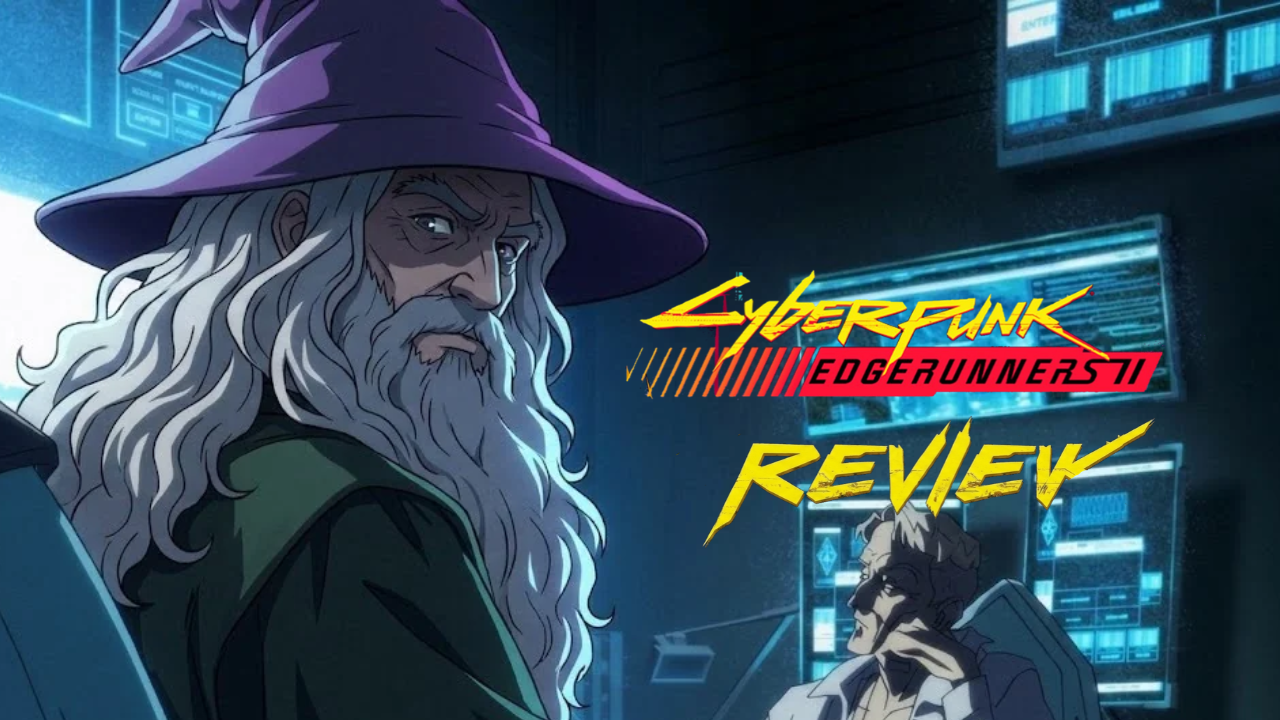
Cyberpunk: Edgerunners 2 Review
/
When the original Cyberpunk: Edgerunners came out in 2022, it hit like a cybernetic freight train. It was short, brutal, and heartbreaking, and it turned a lot of people into Night City fans overnight. It also had some ground to gain due to the sloppy launch of the video game Cyberpunk 2077 by CD Project Red. So when a second season was announced, I was excited and a little nervous. Now that I’ve watched all ten episodes, my feelings are mixed. Edgerunners 2 is full of style and big ideas, but the story didn’t land the way I wanted it to. It felt cheaper, and I kept comparing it to the first series and coming up short.
What It’s About
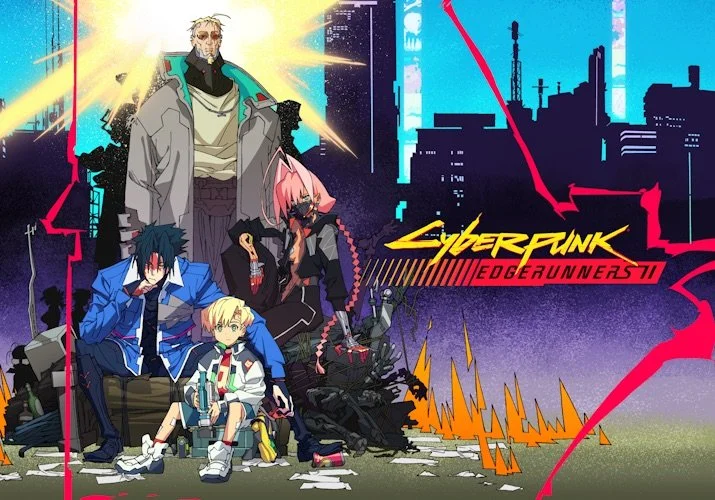
This is a standalone sequel with a brand-new cast, so you don’t have to have seen season one. It takes place in 2078, about a year after the events of Cyberpunk 2077, and Arasaka’s grip on Night City is slipping, which lets rival corporation Kang Tao move in.
The story follows Roman Carax, a young amateur filmmaker who documents everyday life in Night City with an old-fashioned camera and gets pulled into the lives of the people around him. Chief among them are D, a vengeful netrunner hunting the killer of his clan; Talia Yang, a rebellious teenager who ran away from her corporate upbringing; and Weak “King” Kingsley, a once-celebrated edgerunner who has fallen far from his glory days. Everything revolves around a data shard containing a dangerous, unpredictable power that every corporation and criminal in the city wants. I guess data shard sounds cooler than a jump drive.
Where the Story Lost Me
Here’s the meat and chrome of my reaction. The first season worked because it was simple and personal. It followed one person, David, and you felt every step of his rise and fall. Edgerunners 2 takes a very different approach, weaving together several storylines at once. That’s an interesting idea on paper, but in practice the story felt more scattered, and the emotional payoffs weren’t as strong.
A few things bothered me:
Too many threads. There are corporations, a mysterious datashard, a deadly neural condition, a revenge quest, an Arasaka cover-up, and a filmmaker in the middle of it all. It’s a lot to juggle in ten short episodes, and some storylines end up feeling thin.
Character development felt held back. Much of the characters’ backstory and motivation is treated as a mystery to be slowly unraveled, which made it harder for me to get emotionally invested in them early on. I wanted to know and care about these people sooner. Also, are we going to talk about why a little kid just starts housing a guy off the street?
It felt cheaper. Several turns of the plot felt convenient or rushed, and some of the big emotional moments didn’t carry the weight I was hoping for. Where season one earned its heartbreak, this one sometimes just asked me to feel it.
To be fair, I’m not alone in being divided. Some critics praised the worldbuilding, the visual design, and the darker, more mature tone, and one called the final act a satisfying conclusion to a sprawling story. Others felt the show was too ambitious for its own good and that the pacing was overwhelming and unfocused. I land closer to the second camp, though the ending did pull some of it together for me.
Callbacks to the First Series
One of the most enjoyable parts of Edgerunners 2 is seeing how it connects to the original. The show makes it clear that the events of season one still echo through Night City.
David Martinez is a ghost in the background. His name comes up in Arasaka’s records. In one episode, Roman and D hack into Arasaka Tower and discover a list that includes David’s name alongside D’s and Talia’s. It’s a neat reminder that David’s story hasn’t been forgotten by the people he fought.
His crew’s legacy. We learn that a key Arasaka figure tied to the massacre of D’s clan was already killed by David Martinez’s crew, tying the sequel back to the first story.
Arasaka’s decline. The setting itself is a consequence of what David and V set in motion, with Arasaka losing influence and Kang Tao stepping in.
Soulkiller. The Arasaka soul-transfer technology that looms over this story is a familiar piece of Cyberpunk lore.
Cyberpunk’s familiar machinery. Cyberpsychosis, MaxTac, Trauma Team, and the Maelstrom gang all return, with King’s cyberpsychotic rampage in the opening episode echoing the dangers we saw in the first series.
The name “D”. The netrunner’s real name turns out to be David, a coincidence that feels like a deliberate wink to the original hero.
Behind the scenes. The director, Kai Ikarashi, was picked by showrunner Bartosz Sztybor after the work he did on season one’s sixth episode, “Girl on Fire.”
These touches are nice, but they also work against the show in a way. Every time the story reminded me of David, Lucy, or the original crew, I was reminded of how much more compelling that story felt, and the new cast didn’t quite hit the same emotional highs.
The Characters
The new characters have plenty of promise. Roman’s camera gives the show a unique perspective, and I liked the idea of a kid trying to capture the truth in a city built on fake experiences. King is a good, world-weary figure, and Talia has a compelling and tragic arc. D is intense, and his revenge-fueled spiral gives the show a lot of its energy.
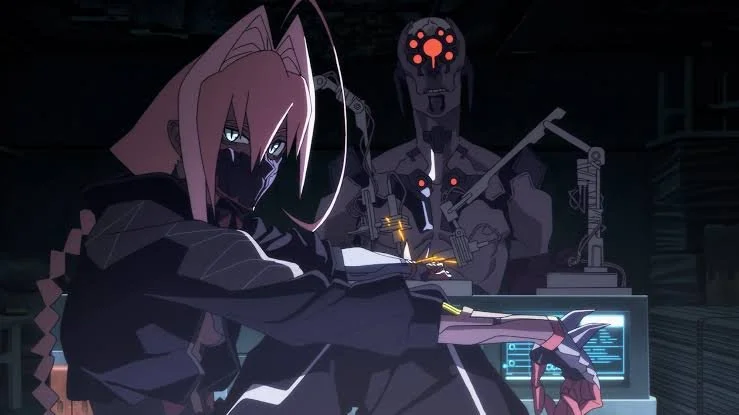
The problem is that there are so many of them, and the story doesn’t always give each of them enough room. Instead of the focused, intimate bond we got in season one, the relationships here feel more spread out, and a few emotional beats didn’t land as strongly as they should have.
The Animation and Style
Visually, the show is bold. Trigger delivers a darker, grittier look with a strong 1990s flavor, shifting styles to reflect characters’ states of mind, and a lot of the story takes place in daylight, which makes a nice contrast to the usual neon-soaked nights. The Cure’s opening theme and Tsuneo Imahori’s score was a letdown and an easy skip for me.
That said, the style is quite different from season one, and viewers have been divided on it. For me, the visuals are interesting but I wanted more polish and time put into them, and I never felt the same awe I did watching the original. This season had moments of frozen frames that was clearly money related and make it feel cheap. Especially cause it happened so often.
How It Compares to Season One
Season one was a tragedy told through a single, deeply human lens: a young man chasing a dream and losing everything. Edgerunners 2 is more of a sprawling ensemble crime story, with a different tone and a different focus. That could have been refreshing, but I found it less affecting. It has the trappings of Edgerunners without quite capturing the same heart.
My Hope for the Future
I don’t want this to be the end of Edgerunners. Night City is a rich, dangerous world with a lot of stories left to tell, and Trigger and CD Projekt Red clearly have the talent to tell them.
My hope is that we get another series down the line, one that’s given more time and more care. Time for a tighter, more focused story that lets us fall in love with its characters before it breaks our hearts. Time for the animation team to polish every frame. The first series proved that a short, focused anime can be unforgettable, and I’d love to see that standard return.
Final Verdict
Cyberpunk: Edgerunners 2 is stylish, ambitious, and full of nods to the original, and it’s worth watching if you love Night City. But the story didn’t land the way I wanted it to, and it felt cheaper than the first season, with too many threads and not enough emotional payoff. I admire what it tried to do, and I’m hopeful that a future series gets the time and care it deserves.
2.5 out of 5 stars.





Edgerunners 2 is full of style and big ideas, but the story didn’t land the way I wanted it to. It felt cheaper, and I kept comparing it to the first series and coming up short.